Headless CMS vs. Traditional CMS: Which One is Right for Your Website in 2025?
ALAli··3 min read
Introduction
As digital experiences evolve, businesses and developers are exploring new ways to manage and deliver content. Traditional CMS platforms like WordPress have long been the standard, but Headless CMS solutions are gaining popularity due to their flexibility and omnichannel capabilities. In this guide, we’ll compare Headless CMS vs. Traditional CMS, explore their advantages and drawbacks, and help you decide which one is the best fit for your website in 2025.
1. What is a Traditional CMS?
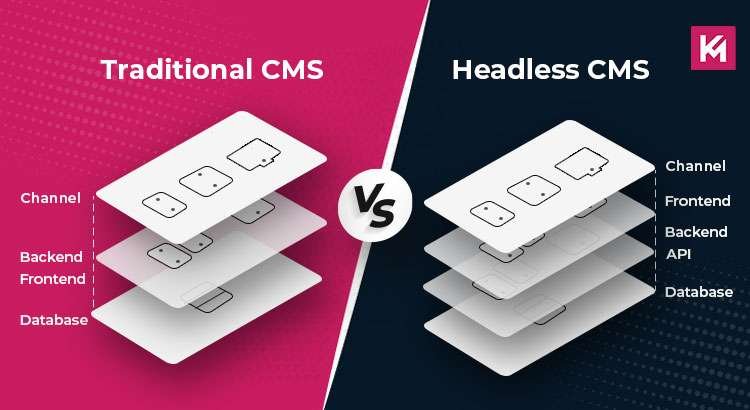
A Traditional CMS (Content Management System) combines both content creation and front-end presentation in a single platform. Popular examples include WordPress, Drupal, and Joomla.
🔹 Key Features:
All-in-one solution: Content management and website design are integrated.
User-friendly: Non-technical users can create and edit content easily.
Themes and plugins: Extend functionality without custom coding.
SEO and blogging capabilities: Built-in optimization features.
🔹 Pros and Cons:
Pros
Cons
Easy to use for non-developers
Limited flexibility for omnichannel experiences
Built-in themes and templates
Performance issues with large websites
Strong community and support
Updates and security vulnerabilities
SEO-friendly tools and plugins
Difficult to scale for modern applications
2. What is a Headless CMS?
A Headless CMS separates the back-end content management system from the front-end presentation. Instead of being tied to a single website, a Headless CMS delivers content via APIs, making it highly flexible and scalable.
🔹 Key Features:
Content is stored separately and accessed through an API.
You need an easy-to-use platform with built-in design tools.
Your website is mainly a blog or small business site.
You don’t require complex integrations with multiple platforms.
You want SEO-friendly plugins and quick setup.
✅ Best For: Bloggers, small businesses, and content-heavy websites.
5. When Should You Choose a Headless CMS?
✅ Choose Headless CMS if:
You need content to be accessible across multiple platforms (website, mobile apps, IoT devices).
You require high performance, speed, and scalability.
Your development team prefers modern front-end frameworks.
You want to future-proof your content strategy.
✅ Best For: Large enterprises, developers, and companies with omnichannel strategies.
6. The Future of CMS in 2025
🔮 Hybrid CMS Solutions – Platforms that combine the benefits of both Headless and Traditional CMS will gain popularity. 🔮 AI-Powered CMS – Machine learning and automation will enhance content personalization. 🔮 More API-First Approaches – APIs will be the standard for content distribution. 🔮 Security Enhancements – Stronger protection against cyber threats and vulnerabilities.
Final Thoughts
Both Headless CMS and Traditional CMS have their place in modern web development. If you need a simple, easy-to-use system, a Traditional CMS like WordPress is a great option. However, if you require scalability, performance, and omnichannel content distribution, a Headless CMS is the future.
Need expert guidance? Ali DevSolutions can help you choose the right CMS for your business! 🚀
AL
Ali
Web designer and developer at Ali Dev Solutions, building fast, accessible, conversion-focused websites for businesses worldwide.

Leave a Reply